
整理/李思 制图/董怡璇
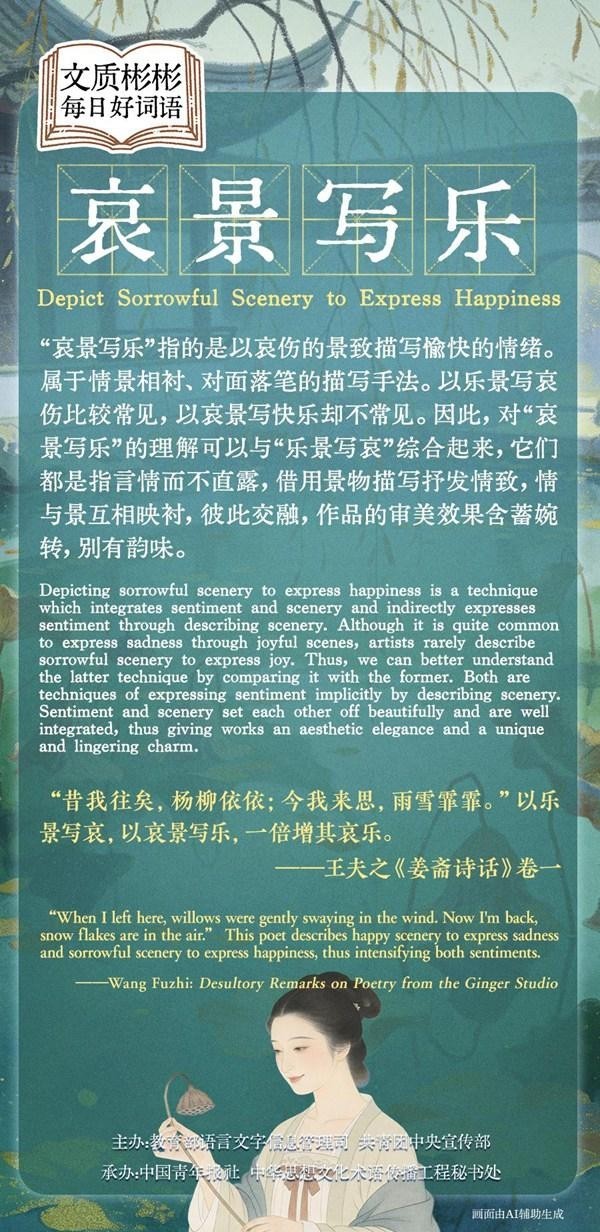
哀景写乐
“哀景写乐”指的是以哀伤的景致描写愉快的情绪,属于情景相衬、对面落笔的描写手法。以乐景写哀伤比较常见,以哀景写快乐却不常见。因此,对“哀景写乐”的理解可以与“乐景写哀”结合起来,它们都是指言情而不直露,借用景物描写抒发情致,情与景互相映衬,彼此交融,作品的审美效果含蓄婉转,别有韵味。
Depict Sorrowful Scenery to Express Happiness
Depicting sorrowful scenery to express happiness is a technique which integrates sentiment and scenery and indirectly expresses sentiment through describing scenery. Although it is quite common to express sadness through joyful scenes, artists rarely describe sorrowful scenery to express joy. Thus, we can better understand the latter technique by comparing it with the former. Both are techniques of expressing sentiment implicitly by describing scenery. Sentiment and scenery set each other off beautifully and are well integrated, thus giving works an aesthetic elegance and a unique and lingering charm.
引例
“昔我往矣,杨柳依依;今我来思,雨雪霏霏。”以乐景写哀,以哀景写乐,一倍增其哀乐。(王夫之《姜斋诗话》卷一)(“以前我离开,杨柳枝条轻柔飘拂;现在我归来,大雪纷纷漫天飞舞。”以欢乐的景象写哀伤,以悲哀的景象写欢乐,更加增强了哀伤与欢乐的气氛。)
"When I left here, willows were gently swaying in the wind. Now I'm back, snow flakes are in the air." This poet describes happy scenery to express sadness and sorrowful scenery to express happiness, thus intensifying both sentiments. (Wang Fuzhi: Desultory Remarks on Poetry from the Ginger Studio)

李思 董怡璇 来源:中国青年报
2026年10月31日 02版
暂无评论