
整理/秦珍子 制图/董怡璇
诗史
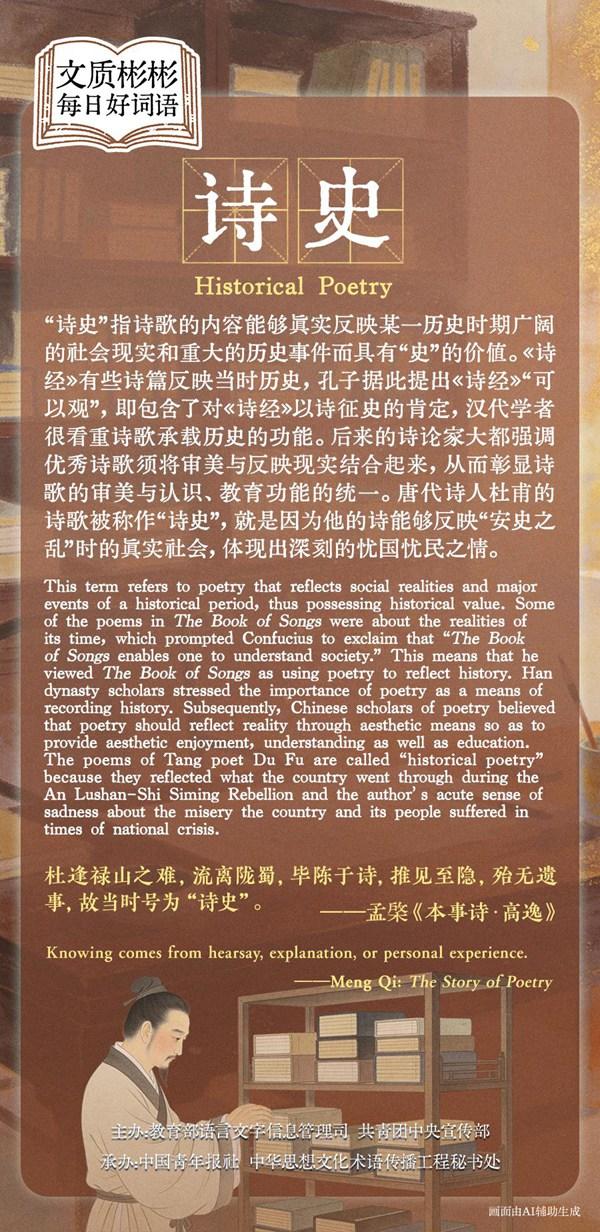
“诗史”指诗歌的内容能够真实反映某一历史时期广阔的社会现实和重大的历史事件而具有“史”的价值。《诗经》有些诗篇反映当时历史,孔子据此提出《诗经》“可以观”,即包含了对《诗经》以诗征史的肯定,汉代学者很看重诗歌承载历史的功能。后来的诗论家大都强调优秀诗歌须将审美与反映现实结合起来,从而彰显诗歌的审美与认识、教育功能的统一。唐代诗人杜甫的诗歌被称作“诗史”,是因为他的诗能够反映“安史之乱”时的真实社会,体现出深刻的忧国忧民之情。
Historical Poetry
This term refers to poetry that reflects social realities and major events of a historical period, thus possessing historical value. Some of the poems in The Book of Songs were about the realities of its time, which prompted Confucius to exclaim that "The Book of Songs enables one to understand society". This means that he viewed The Book of Songs as using poetry to reflect history. Han dynasty scholars stressed the importance of poetry as a means of recording history. Subsequently, Chinese scholars of poetry believed that poetry should reflect reality through aesthetic means so as to provide aesthetic enjoyment, understanding as well as education. The poems of Tang poet Du Fu are called "historical poetry" because they reflected what the country went through during the An Lushan-Shi Siming Rebellion and the author's acute sense of sadness about the misery the country and its people suffered in times of national crisis.
引例
杜逢禄山之难,流离陇蜀,毕陈于诗,推见至隐,殆无遗事,故当时号为“诗史”。(孟棨《本事诗·高逸》)(杜甫遭逢安禄山叛乱引发的灾难,先后漂泊甘肃、四川一带,所经历的一切,全都写在诗中,后人由此推知当时的很多隐约细节,几乎没有什么遗漏,所以当时人称他的诗为“诗史”。)
Du Fu fled to the provinces of Gansu and Sichuan to escape turbulences caused by the An Lushan-Shi Siming Rebellion and wrote about his experiences in poems. As his poems gave vivid and detailed accounts about events of the time, they became known as "historical poetry". (Meng Qi: The Story of Poetry)

秦珍子 董怡璇 来源:中国青年报
2026年10月28日 01版
暂无评论