
整理/秦珍子 制图/李晗
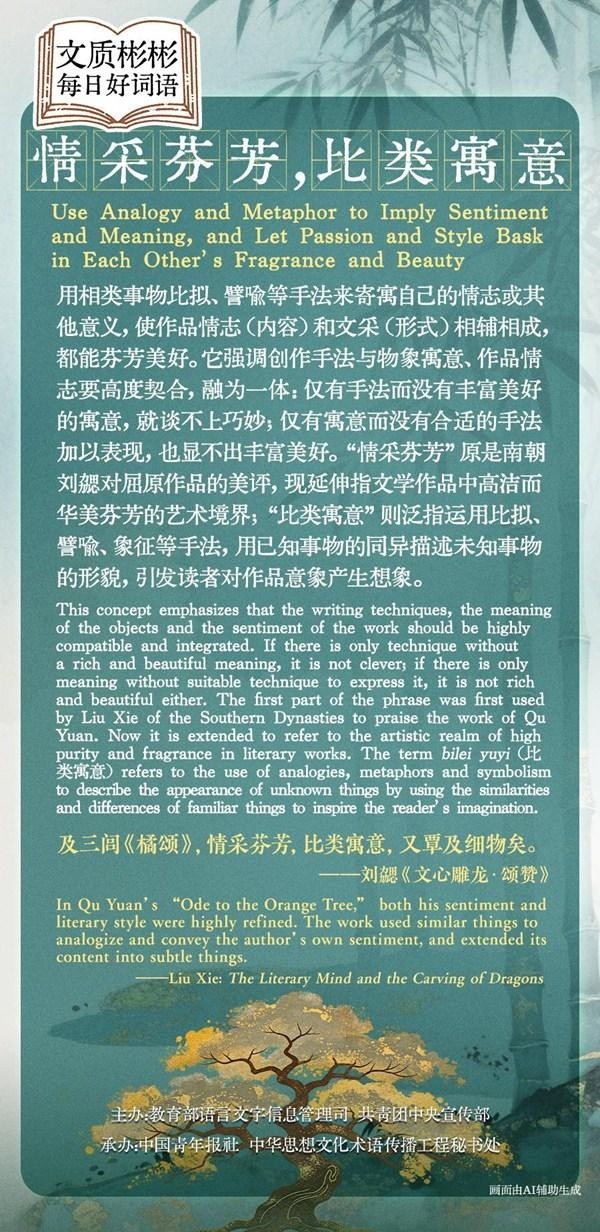
情采芬芳,比类寓意
用相类事物比拟、譬喻等手法来寄寓自己的情志或其他意义,使作品情志(内容)和文采(形式)相辅相成,芬芳美好。它强调创作手法与物象寓意、作品情志要高度契合,融为一体:仅有手法而没有丰富美好的寓意,就谈不上巧妙;仅有寓意而没有合适的手法加以表现,也显不出丰富美好。“情采芬芳”原是南朝刘勰对屈原作品的美评,现延伸指文学作品中高洁而芬芳的艺术境界;“比类寓意”则泛指运用比拟、譬喻、象征等手法,用已知事物的同异描述未知事物的形貌,引发读者对作品意象产生想象。
Use Analogy and Metaphor to Imply Sentiment and Meaning, and Let Passion and Style Bask in Each Other's Fragrance and Beauty
This concept emphasizes that the writing techniques, the meaning of the objects and the sentiment of the work should be highly compatible and integrated. If there is only technique without a rich and beautiful meaning, it is not clever; if there is only meaning without suitable technique to express it, it is not rich and beautiful either. The first part of the phrase was first used by Liu Xie of the Southern Dynasties to praise the work of Qu Yuan. Now it is extended to refer to the artistic realm of high purity and fragrance in literary works. The term bilei yuyi refers to the use of analogies, metaphors and symbolism to describe the appearance of unknown things by using the similarities and differences of familiar things to inspire the reader's imagination.
引例
及三闾《橘颂》,情采芬芳,比类寓意,又覃及细物矣。(刘勰《文心雕龙·颂赞》)(到了屈原作《橘颂》,情志和文采都极为美好,它用相类的事物比拟并寄寓自己的情志,又将“颂”的内容推及细微事物。)
In Qu Yuan's "Ode to the Orange Tree", both his sentiment and literary style were highly refined. The work used similar things to analogize and convey the author's own sentiment, and extended its content into subtle things. (Liu Xie: The Literary Mind and the Carving of Dragons)
秦珍子 李晗 来源:中国青年报
2026年11月17日 02版
暂无评论